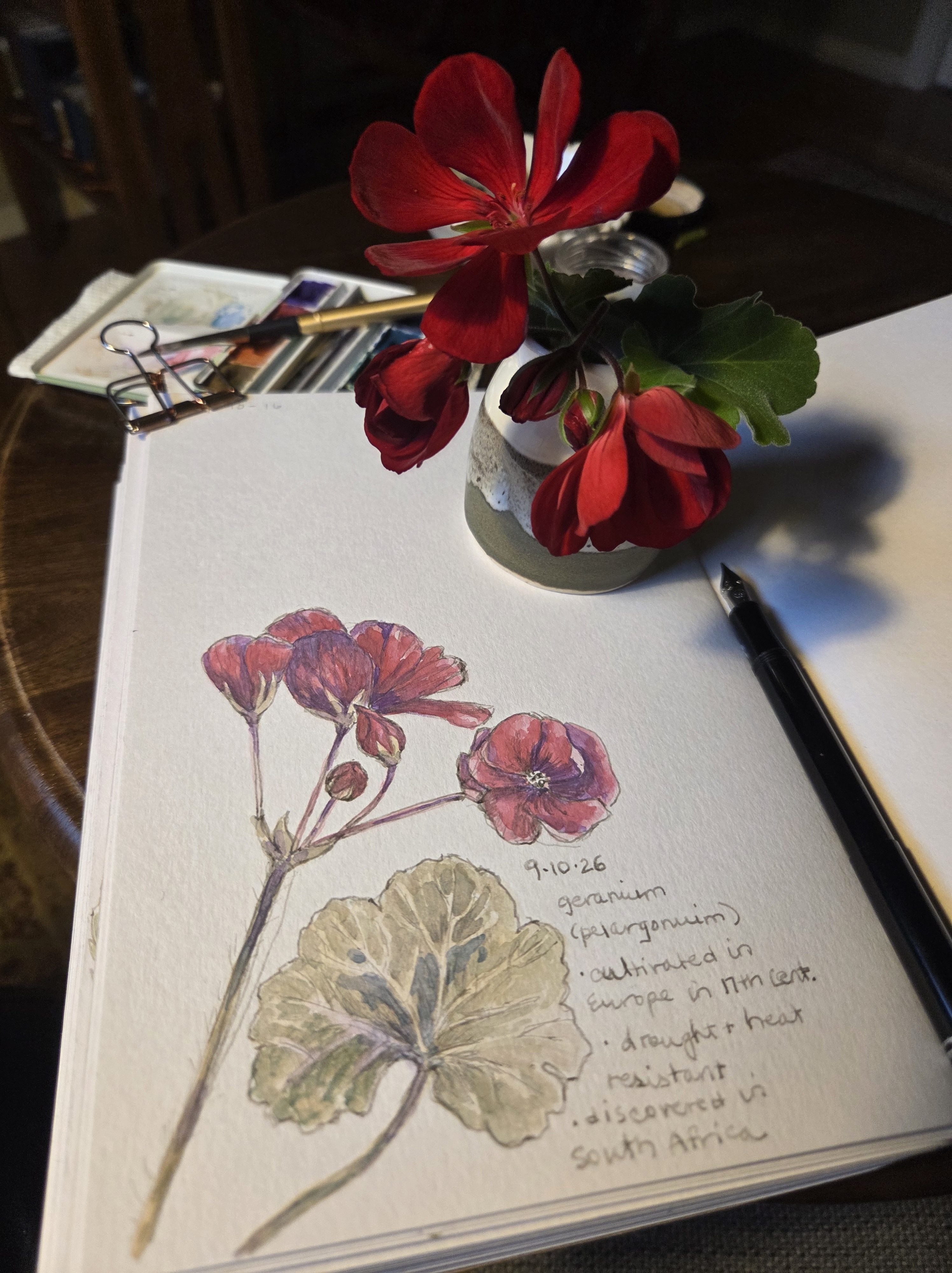
Annual geranium (pelargonium), also known as ‘storksbills,’ were originally found in South Africa and slowly wended their way across Europe, followed by North America. It does well here in the foothills of the Rocky Mountains where we experience quite a bit of drought and cooler weather from spring to autumn. This variety differs from the perennial version, cranesbill, in that it is many petalled with several flowers on each stalk and has a palm-like shaped leaf that is almost circular. The perennial cranesbill is herb-like while the annual pelargonium is toxic. But they are both beautiful.
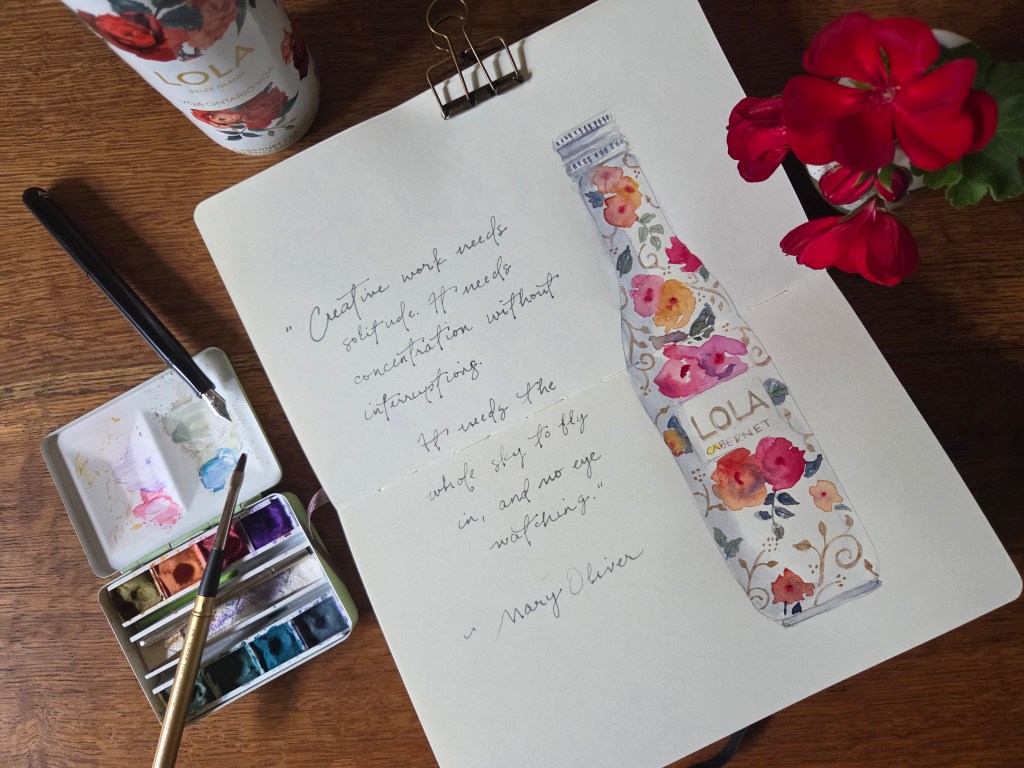
“Creative work needs solitude. It needs concentration without interruptions. It needs the whole sky to fly in, and no eye watching until it comes to that certainty which it aspires to, but does not necessarily have at once. Privacy, then. A place apart – to pace, to chew pencils, to scribble and erase and scribble again..”
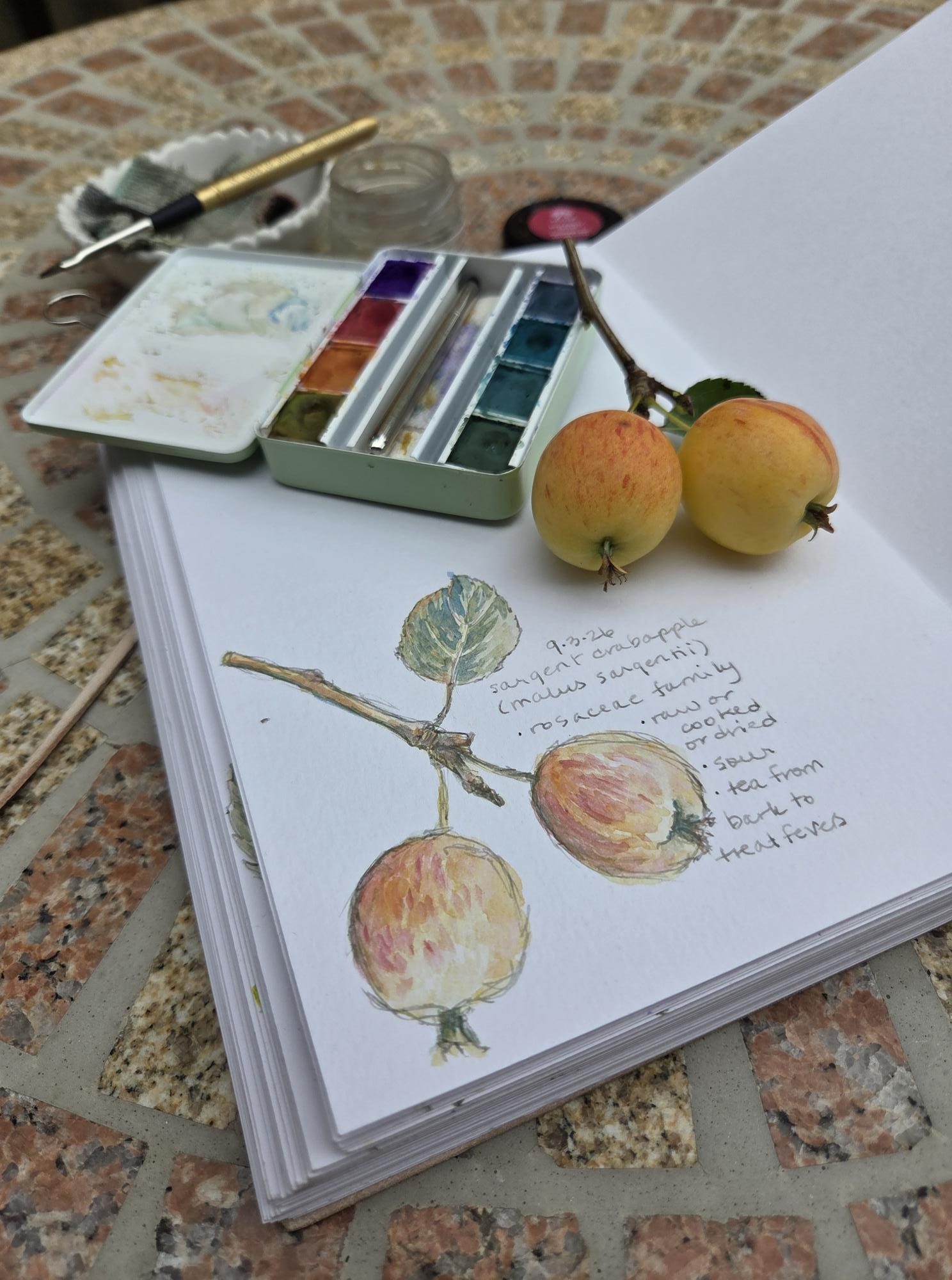
Malus sargentii, the Sargent crabapple or Sargent’s apple, is a species of flowering plant in the genus Malus of the family Rosaceae. The species was formerly considered a variety of the species Malus sieboldii. It is a shrub or small tree growing to 6–10 ft (1.8–3.0 m) tall and 6–12 ft (1.8–3.7 m) broad. Malus sargentii is native to Japan but is commonly used as an attractive compact ornamental shrub elsewhere. Every other year it bears masses of pink buds opening to fragrant white blossom. In the autumn, many small red globose fruits appear, persisting on the tree until winte
One day you finally knew what you had to do, and began, though the voices around you kept shouting their bad advice— though the whole house began to tremble and you felt the old tug at your ankles. “Mend my life!” each voice cried. But you didn’t stop. You knew what you had to do, though the wind pried with its stiff fingers at the very foundations, though their melancholy was terrible. It was already late enough, and a wild night, and the road full of fallen branches and stones. But little by little, as you left their voices behind, the stars began to burn through the sheets of clouds, and there was a new voice which you slowly recognized as your own, that kept you company as you strode deeper and deeper into the world, determined to do the only thing you could do— determined to save the only life you could save.
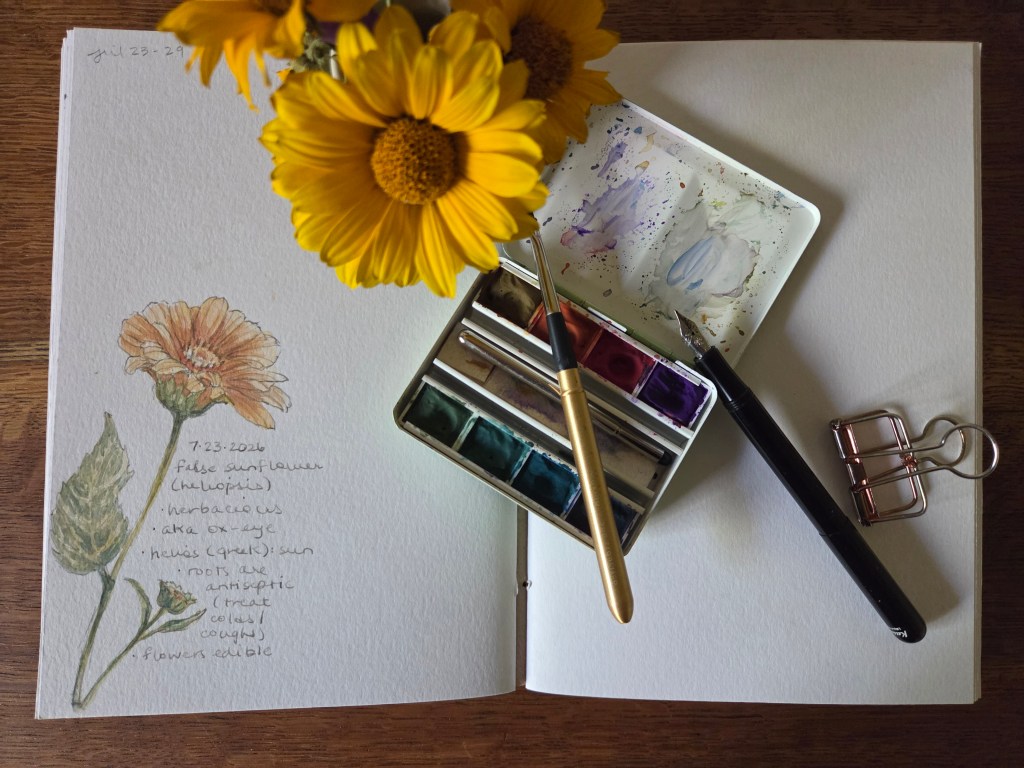
I began a perpetual journal as a way of slowing down and paying attention to the nature that surrounds me. Many years ago, someone asked me a question that has stayed with me: If you weren’t an artist, what would you do? My answer has always been connected to plants. I have long been fascinated by their healing properties…the ways plants have been used to nourish, soothe, restore, and sustain us. So I’ve decided to bring those two interests together in a new project.
For the next five years, I’ll be documenting the plants in my surroundings, one week at a time. A perpetual journal gives me the opportunity to return to the same pages year after year, noticing what is blooming, changing, disappearing, and returning. It is as much a practice of observation as it is a record. Painting a plant asks me to really look at it. And perhaps that is the heart of this project: learning to see what is already here.
Over five years, I hope these pages will become more than a collection of botanical studies. I want them to hold a record of place and season, curiosity and discovery; a visual diary of the living world around me, and a continuing exploration of the relationship between art, nature, and the healing properties of plants.